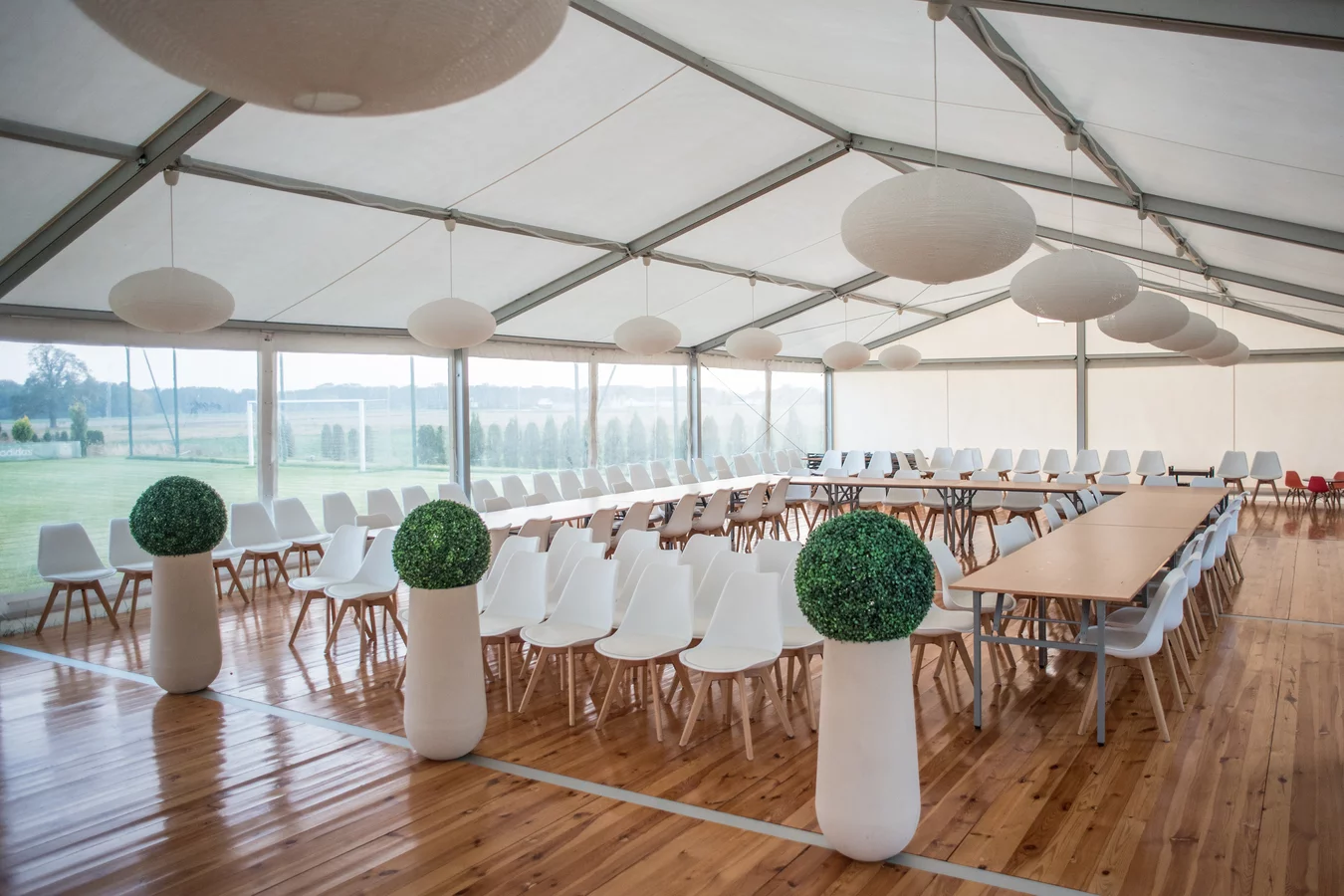



Tent halls
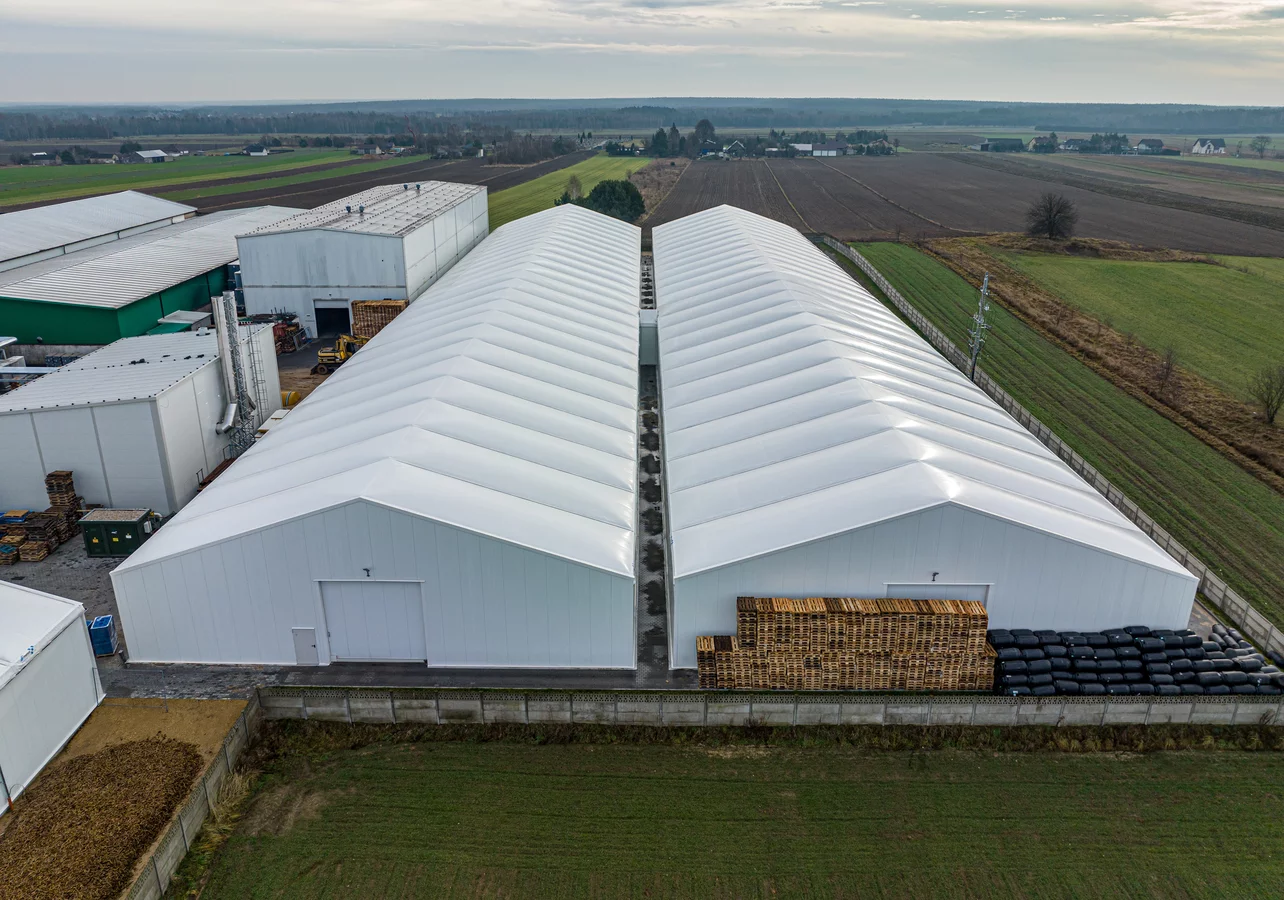
1. Structure and Materials
- Frame - usually aluminum or steel-aluminum, lightweight yet durable.
- Covering - typically made of high-quality PVC or coated polyester fabric, resistant to weather conditions, UV radiation, and mechanical damage.
- Modularity - allows for quick extension of the hall by adding additional segments.
2. Mobility and Ease of Assembly
- Fast assembly and disassembly compared to traditional buildings.
- No need for deep foundations - paving stones or concrete blocks are often sufficient.
- Possibility of relocation and reuse in another location.
3. Functionality
- Can serve as warehouses, workshops, sports facilities, exhibition halls, event pavilions, or even agricultural buildings (e.g., for machinery or animals).
- Often available with additional options such as gates, doors, windows, lighting, heating, or air conditioning.
4. Economy
- Significantly lower construction cost compared to brick buildings.
- Shorter project completion time.
- Flexibility - possibility to rent or purchase.
5. Resistance and Durability
- Depending on the build quality, they can withstand wind, rain, and snow.
- Year-round halls are reinforced and designed according to snow and wind load standards for the specific climate zone.